Imagine a regulated education corporation with “perfect” process: release trains, environment sign-offs, compliance briefings. They run dev, qa, staging, cert, uat, prod—each with its own schedule, data set, and maintenance window.
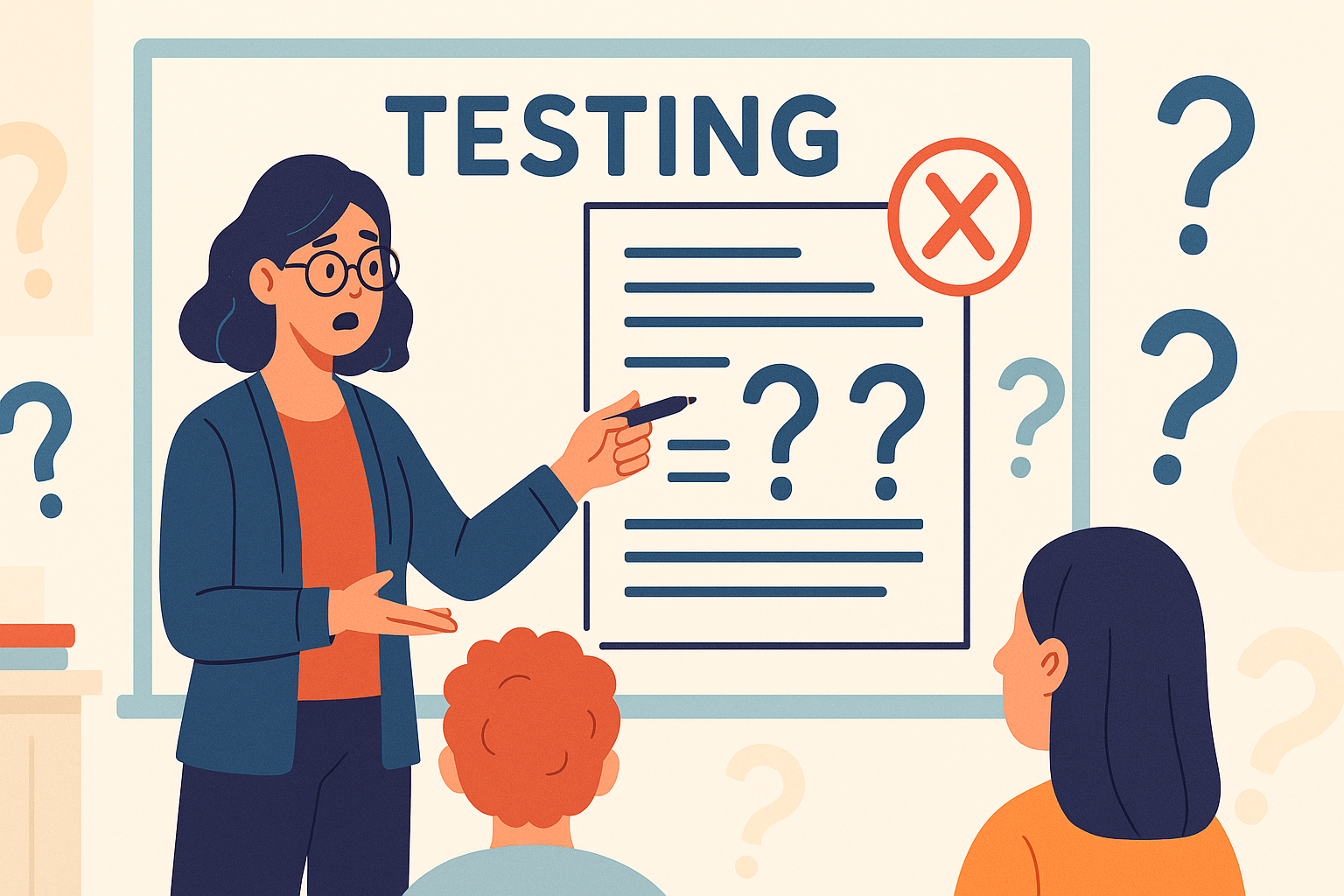
But here’s the catch: no one can answer the simplest question—“Which version did we test?”
Release trains without data
Each train carries dozens of services. When dev finishes, the build hops to QA. QA hits deploy, signs off, and the train moves on. By the time staging is ready, half the team already forgot which commit actually made it onto the rail.
Regulators demand artifact trails. Program management demands reports. Engineers just want to know if the nightly run failed because of configuration or code.
None of that is possible without linking tests to the SUT.
War rooms with empty timelines
One night the “green” cert environment starts failing. The release train is paused, executives jump into a war room, and compliance asks for proof of test coverage.
Teams scramble through:
- Excel checklists
- CI logs that expired last week
- Chat screenshots
- Old SharePoint PDFs
No single source tells them what changed or which environment was actually tested.
OpenQuality’s fix
OpenQuality attaches every test run to a specific build, environment, and time. With that context, you get:
- A visible SUT history for each environment
- Real-time dashboards showing release train health
- Evidence packages you can hand to auditors without a scavenger hunt
Instead of wasting cycles in another midnight war room, platform teams look at OpenQuality and instantly see: “We tested build 4b1d in QA, but staging picked up 4b2e.”
Visibility replaces guesswork. Release trains keep moving.